The SUZUKI APPROACH
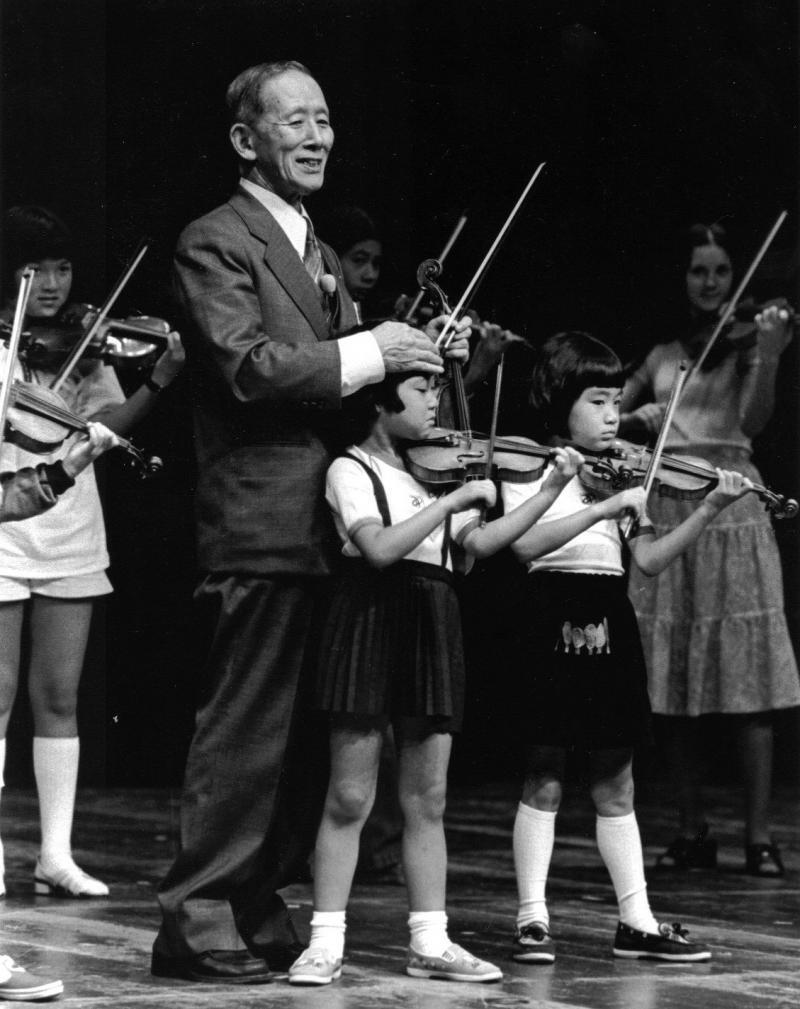
The Japanese violinist and educator Dr. Shinichi Suzuki (1898–1998) was inspired by the way children naturally learn their first language. Coining what he called the Mother Tongue Approach, Suzuki advocated for the idea that every child has the ability to develop musical skill when given excellent training and a nurturing environment.
Suzuki lessons emphasize listening, as well as a stepwise development of strong technical and musical foundations. Students begin by learning music by ear before reading notation, allowing them to focus on beautiful tone, posture, rhythm, and expression from the very beginning. Parents play an active and supportive role in the learning process, particularly with young children. Parents work together with the teacher to support student learning through what is called the Suzuki Triangle.
Regular individual lessons, group classes, and performances help students develop confidence, motivation, and a sense of community. Music reading is introduced intentionally, as students become ready, complementing the strong listening and playing skills they have already developed.
Today, Suzuki's philosophy is well-recognized around the world. It has inspired generations of confident, capable, and joyful musicians. Many have gone on to become top professional musicians, and many more have taken the lessons they learned through music into their chosen professions and everyday lives. As Suzuki wrote, "Music exists for the purpose of growing an admirable heart."